the night before Rebus’s investigation begins
Ronnie Sends Tracy Away
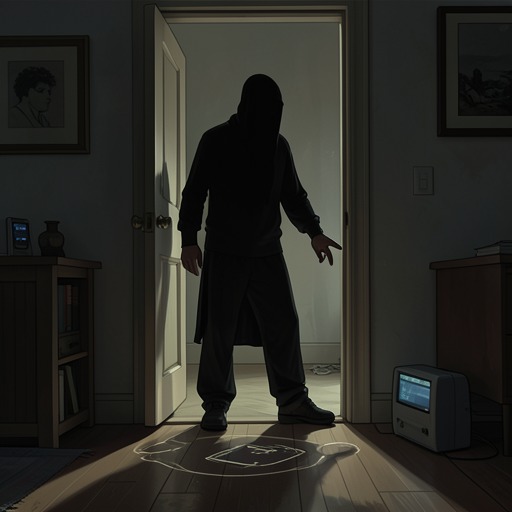
In a [Pilmuir](entity:location-recall-location-pilmuir-b1a457dcb789) squat, [Ronnie McGrath](entity:character-recall-character-ronnie-mcgrath-84a8423b4042) panics and drives [Tracy](entity:character-recall-character-tracy-ddcb75ceb1e0) out into the rain, insisting that people are coming for him. He tells her to hide and says they have murdered him, though he is still alive.
the weekend before the investigation
Rebus at Rian’s Dinner
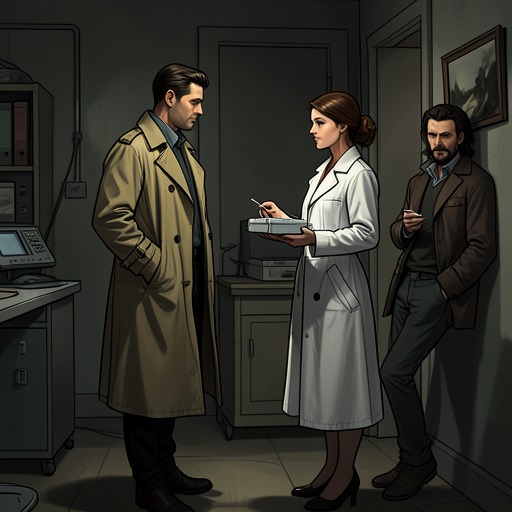
At a dinner party hosted by Rian, [John Rebus](entity:character-recall-character-john-rebus-cf9c53075b83) feels out of place among guests whose polished conversation leaves him longing for a world he understands. His awkwardness and harsh humour make the evening uncomfortable, despite his affection for his host.
late evening around the opening of the story
A Body Buried at the Site
At a fenced construction site on [Edinburgh](entity:location-recall-location-edinburgh-3139a0b6e81a)’s outskirts, three men secretly dispose of a dead teenager in a deep pit. One calls the death a waste; another makes clear that they have been instructed not to ask questions.
Monday morning
The Squat’s Ritual Scene
Called to a derelict house in [Pilmuir](entity:location-recall-location-pilmuir-b1a457dcb789), [John Rebus](entity:character-recall-character-john-rebus-cf9c53075b83) finds [Ronnie McGrath](entity:character-recall-character-ronnie-mcgrath-84a8423b4042)’s body laid out between burned-down candles, arms outstretched and legs together. A jar of syringes, a pentagram and bruises make the apparent overdose look like a staged occult death.
Monday morning at the crime scene
The First Signs of Murder
The doctor initially calls the death a heroin overdose, but confirms extensive bruising on [Ronnie McGrath](entity:character-recall-character-ronnie-mcgrath-84a8423b4042)’s torso and face. Rebus resists the constables’ easy conclusions about witchcraft, while a witness’s empty home and the carefully arranged corpse leave him uneasy.
Monday morning
Photographs in Ronnie’s Room
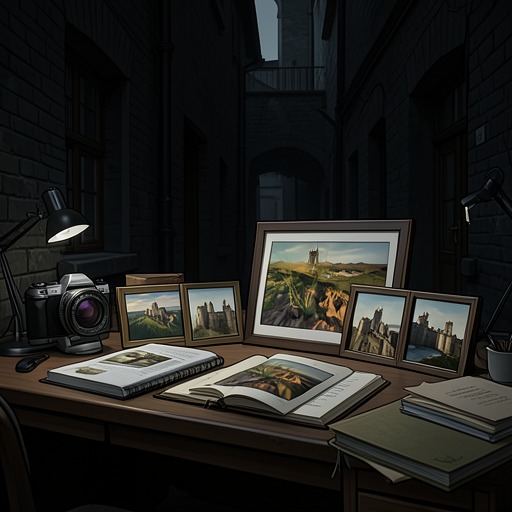
In an upstairs bedroom, Rebus finds a sleeping bag, horror paperbacks and a collection of photographs, including images of [Edinburgh Castle](entity:location-recall-location-edinburgh-castle-af188cffa37c) and a laughing young woman. The pictures suggest that the dead man had once cared about photography, but his camera is missing.
Monday, after the discovery
Rebus’s Fractured Private Life
Driving back from the scene, Rebus thinks of his estranged wife and daughter, his failed relationship with [Gill Templer](entity:character-recall-character-gill-templer-5ac9b94e191b) and the awkward evening he has just spent with Rian. His new rank as detective inspector has not brought him confidence or contentment.
Monday lunchtime
McCall Describes Pilmuir
At a pub, Rebus meets [Anthony McCall](entity:character-recall-character-anthony-mccall-05a528868a08), who admits he grew up in the neighbourhood and remembers the earlier estate that stood where [Pilmuir](entity:location-recall-location-pilmuir-b1a457dcb789) now decays. McCall suggests that the university may offer expertise on the occult symbols found beside the body.
Monday afternoon
Tracy Calls the Police
A frightened caller named [Tracy](entity:character-recall-character-tracy-ddcb75ceb1e0) tells Rebus that the dead man was Ronnie and that Ronnie had said he was murdered. She says she found him upstairs, not in the living room where police discovered him, and agrees to meet Rebus.
Monday afternoon
Rebus Meets Tracy
Outside the Dock Leaf on [Shore Road](entity:location-recall-location-shore-road-8eba1a0930a5), Rebus meets [Tracy](entity:character-recall-character-tracy-ddcb75ceb1e0), the young woman whose portrait photographs he saw in Ronnie’s room. She describes Ronnie’s panic before he used the heroin and says he often returned bruised, while insisting she herself is not addicted to heroin.
Monday afternoon
A Missing Camera and a Friend
[Tracy](entity:character-recall-character-tracy-ddcb75ceb1e0) explains that Ronnie wanted to become a photographer and had saved carefully for his camera, which he would not pawn. She also describes [Charlie](entity:character-recall-character-charlie-24c3a7bd9408), an occult enthusiast who painted the pentagram, and says Ronnie disliked horror stories and films.
Monday afternoon
Watson’s Anti-Drug Campaign
[Superintendent Watson](entity:character-recall-character-superintendent-wats-b7760c03a906) summons Rebus and announces a publicly funded campaign against [Edinburgh](entity:location-recall-location-edinburgh-3139a0b6e81a)’s drug crisis. He presses Rebus to serve as its police face, citing Rebus’s personal experience with a brother jailed for dealing, and effectively takes him away from ordinary casework.
Monday evening
Rebus Returns to the Squat
Despite his new assignment, Rebus returns alone to the squat and checks where [Tracy](entity:character-recall-character-tracy-ddcb75ceb1e0) says she found Ronnie. He discovers a broken tie clip on the stairs, then sees that someone has completed the pentagram and added a fresh message: “Hello Ronnie.”
Tuesday morning
The Poison Is Confirmed
The laboratory tells Rebus that the heroin packet found with Ronnie was dangerously adulterated, while another packet appeared relatively clean. [Dr Enfield](entity:character-recall-character-dr-enfield-36658f762057) confirms that the lethal dose was likely contaminated with poison, making the death a probable murder rather than a routine overdose.
Tuesday morning
McCall Joins the Search
Rebus finds [Anthony McCall](entity:character-recall-character-anthony-mccall-05a528868a08) in [Pilmuir](entity:location-recall-location-pilmuir-b1a457dcb789) and tells him that Ronnie may have been poisoned. McCall agrees to help locate [Charlie](entity:character-recall-character-charlie-24c3a7bd9408), though he reminds Rebus that Pilmuir is his patch and that a detective who ignores local relationships may find doors firmly shut.
Tuesday morning
The Changed Crime Scene
Rebus shows McCall the position of Ronnie’s body and the newly painted message. The mismatch between [Tracy](entity:character-recall-character-tracy-ddcb75ceb1e0)’s account and the staged scene convinces McCall that the death merits investigation, even though the apparent occult clues may be a deliberate distraction.
Tuesday afternoon
The Broken Tie Clip
Back at the station, Rebus tests the broken clip against a police issue clip-on tie and realizes it could have come from a constable’s uniform. The clue raises the troubling possibility that someone in the police was present at the squat before the body was found.
Tuesday afternoon
Poole Identifies Charlie
At the [University of Edinburgh](entity:location-recall-location-university-of-edinbu-bf9904973974), [Dr Poole](entity:character-recall-character-dr-poole-6ffa2de7bb86) explains that the pentagram resembles occult symbolism but warns against leaping from ritual appearance to Satanic murder. He identifies a student called [Charlie](entity:character-recall-character-charlie-24c3a7bd9408) who is deeply interested in demonism, giving Rebus a route to Ronnie’s associate.
Tuesday afternoon
Rebus Finds Charlie
Rebus tracks [Charlie](entity:character-recall-character-charlie-24c3a7bd9408) to a university games room, where the student is absorbed in pinball. Charlie first denies his identity, then agrees with unusual eagerness to accompany Rebus to the station for questioning.
Tuesday evening
Charlie Describes Ronnie’s World
In interview, [Charlie](entity:character-recall-character-charlie-24c3a7bd9408) describes himself as a visitor to the neglected estates where [Edinburgh](entity:location-recall-location-edinburgh-3139a0b6e81a)’s darker history persists beneath the tourist image. He says Ronnie had recently struggled to obtain heroin and hints that the young man had sought money on [Calton Hill](entity:location-recall-location-calton-hill-c39dbe4e295a).
Tuesday evening
Neil and the Missing Camera
[Charlie](entity:character-recall-character-charlie-24c3a7bd9408) says Ronnie had a close male friend called [Neil](entity:character-recall-character-neil-8d4bacdd310a), whom he describes as a possible lover, and admits that he returned to the squat to complete the occult painting. Rebus tells him the heroin was lethal and presses him about the body’s staging and the candles.
Tuesday night
Tracy Seeks Refuge
After leaving the station, [Tracy](entity:character-recall-character-tracy-ddcb75ceb1e0) turns up at Rebus’s flat, saying two men have followed her through the city. Rebus lets her in, gives her tea and a bath, and allows her to sleep on his sofa, though he suspects there may be more to her story.
Tuesday night
The Watcher Outside
Rebus notices a car waiting across the street while [Tracy](entity:character-recall-character-tracy-ddcb75ceb1e0) asks to stay. He follows it outside barefoot and recognizes the driver’s police uniform before the car escapes, connecting her fear to someone with access to the force.
late Tuesday night
Holmes’s First Assignment
Rebus calls [Brian Holmes](entity:character-recall-character-brian-holmes-2735e21e8228) on duty and gives him a chain of tasks: identify the constables who found Ronnie, trace the photographs to their newspaper source and learn more about the pictured woman. Holmes is baffled by the fragmented instructions but begins work.
Wednesday morning
Holmes Traces the Photographs
Holmes searches newspaper archives and finds that several photographs of [Edinburgh Castle](entity:location-recall-location-edinburgh-castle-af188cffa37c) closely match those in Ronnie’s room. Their publication leads him to [Hutton Studios](entity:location-recall-location-hutton-studios-191cb5e1cdaf), where he is to ask whether Ronnie had approached the photographer for help.
Wednesday morning
Rebus Questions the Constables
Rebus questions the two constables who discovered the body. Neither went upstairs, and neither admits to a broken tie clip or driving a Ford Escort, leaving the evidence unresolved and deepening Rebus’s suspicion that someone else had been inside the house.
Wednesday lunchtime
The Elite Lunch
Rebus attends a lavish lunch arranged by [Superintendent Watson](entity:character-recall-character-superintendent-wats-b7760c03a906) with businessmen financing the anti-drug campaign. [James Carew](entity:character-recall-character-james-carew-b9a1acc9fe3d), [Finlay Andrews](entity:character-recall-character-finlay-andrews-53c41d019f73) and [Tommy McCall](entity:character-recall-character-tommy-mccall-702d067d5d65) are among the guests, and their talk of rising property values makes the city’s widening class divide feel immediate.
Wednesday afternoon
Holmes Visits Hutton Studios
At [Hutton Studios](entity:location-recall-location-hutton-studios-191cb5e1cdaf), Holmes learns that Ronnie had visited the photographer with his work but was brushed aside. During a tour of the studio, Holmes secretly takes a nude photograph that appears to show [Tracy](entity:character-recall-character-tracy-ddcb75ceb1e0), a discovery that complicates both her history and her relationship with Ronnie.
Wednesday evening
Rebus Meets Neil
Rebus returns to the squat and finds the uniformed watcher he recognizes as [Neil](entity:character-recall-character-neil-8d4bacdd310a). Neil admits he is Ronnie’s brother, explains that their parents had disowned Ronnie, and says he had secretly tried to help him after finding him addicted and battered.
Wednesday evening
Neil’s Tie Clip Explained
[Neil](entity:character-recall-character-neil-8d4bacdd310a) confirms that the clip Rebus found belongs to his broken tie and that he was in the house on the night Ronnie died. He says he followed Rebus because he wanted to know what had happened to his brother, but Rebus refuses his offer to join the investigation.
Wednesday night
Rebus Encounters James
Near [Calton Hill](entity:location-recall-location-calton-hill-c39dbe4e295a), Rebus approaches young men who solicit passing drivers and speaks with a teenager who calls himself James. The boy says he has heard rumours of bruised youths, violent private entertainments and a demand for real photographs.
Wednesday night
The Name Hyde
James tells Rebus that he has heard the name [Hyde](entity:character-recall-character-hyde-ca1baabb89c8). The word joins Ronnie’s warning to [Tracy](entity:character-recall-character-tracy-ddcb75ceb1e0) with the clues already troubling Rebus, who also notices [James Carew](entity:character-recall-character-james-carew-b9a1acc9fe3d) in a Jaguar with a much younger companion nearby.
Thursday morning
Tracy’s Betrayal Emerges
Rebus confronts [Tracy](entity:character-recall-character-tracy-ddcb75ceb1e0) with the nude photograph Holmes found and accuses her of taking Ronnie’s photographic ideas to Hutton for money. He suspects that she helped destroy Ronnie’s chance to succeed; Tracy breaks down, then strikes Rebus in the groin and runs away.
Thursday morning
Tracy Attacks Nell
At [Edinburgh University Library](entity:location-recall-location-edinburgh-university-9de7d4b68045), [Tracy](entity:character-recall-character-tracy-ddcb75ceb1e0) tries to force her way past the guard and attacks [Nell Stapleton](entity:character-recall-character-nell-stapleton-bca2287753e1), breaking her nose. The assault brings Holmes’s private relationship into Rebus’s investigation and makes Tracy’s erratic actions feel increasingly dangerous.
Thursday afternoon
Rebus Questions Charlie at Vanderhyde’s
Rebus follows [Charlie](entity:character-recall-character-charlie-24c3a7bd9408) to his blind uncle [Matthew Vanderhyde](entity:character-recall-character-matthew-vanderhyde-2ae2d3b7e7ae)’s home, where Vanderhyde dismisses the notion that the body was a conventional Satanic sacrifice. Rebus then questions Charlie, who admits stealing Ronnie’s camera after finding the body near the stairs.
Thursday afternoon
The Body’s Movement Reconstructed
[Charlie](entity:character-recall-character-charlie-24c3a7bd9408) recounts finding Ronnie dead and taking the camera, but Rebus notices the timing: someone must have been in the house to move the body after Charlie arrived. Charlie breaks down as Rebus explains that the unseen intruder may have stayed hidden inside.
Thursday afternoon and evening
Holmes’s Dog-Fighting Operation
Holmes travels to [Fife](entity:location-recall-location-fife-6e7dd1347e12) to join a planned raid on a suspected dog-fighting ring. The operation is being prepared at an abandoned mining site, where officers expect handlers and gamblers to arrive with pit bulls.
Friday morning
Carew’s Suicide
Holmes tells Rebus that [James Carew](entity:character-recall-character-james-carew-b9a1acc9fe3d) has been found dead after taking an overdose of pills. Rebus is stunned, remembering Carew’s presence on [Calton Hill](entity:location-recall-location-calton-hill-c39dbe4e295a) and recognizing that his chance to question him has disappeared.
Friday morning
Hyde Entries in the Diary
At Carew’s flat, Rebus reads the suicide note and examines the rooms for clues. In a locked personal diary, he finds repeated late-night appointments with [Hyde](entity:character-recall-character-hyde-ca1baabb89c8), several on Fridays, creating a direct link between Carew and the name that haunts Ronnie’s death.
Friday morning
Carew’s Hidden Life
The books and private arrangements in Carew’s elegant flat suggest a life kept separate from his respectable public identity. Rebus considers whether fear of exposure or blackmail could have contributed to the suicide, but the evidence remains incomplete.
Friday morning
Rebus Is Framed
A young prostitute named James accuses Rebus of paying him for sex, turning the money Rebus had given him into a weapon. [Superintendent Watson](entity:character-recall-character-superintendent-wats-b7760c03a906) suspends Rebus from the investigation while the complaint is examined, just as Rebus believes [Hyde](entity:character-recall-character-hyde-ca1baabb89c8) is closing in.
Friday morning
Watson Grants a Club Invitation
Watson tells Rebus that [Finlay Andrews](entity:character-recall-character-finlay-andrews-53c41d019f73) has offered him access to [Finlay’s Club](entity:location-recall-location-finlay-s-club-dc9d6f199a66) and confirms that Rebus should still attend [Malcolm Lanyon](entity:character-recall-character-malcolm-lanyon-8e01d22bd62b)’s party. Rebus accepts the invitation, gaining an opportunity to observe the wealthy circle surrounding Carew.
Friday afternoon
Rebus Finds the Photographs’ Purpose
Holmes brings Rebus photographs from the dog-fighting raid, and the images prompt Rebus to understand that Ronnie’s missing pictures may be important. Rebus remembers the phrase “hide” as both a warning and an instruction to conceal something, and rushes back to the squat.
Friday evening
Ronnie’s Hidden Package
Rebus discovers that workers are clearing the squat on unexplained orders. Searching the foul bathroom with the foreman, he finds a package concealed in the waste and wrapped in plastic, cloth and tape.
Friday evening
The Boxing Photographs
The package contains photographs of a rough boxing match, not the incriminating scenes Rebus expected. Holmes notices that the pictures seem to have been taken secretly from beneath a jacket, suggesting Ronnie was documenting something dangerous even if the images themselves are obscure.
Friday night
Tracy Reveals the Library Hiding Place
[Tracy](entity:character-recall-character-tracy-ddcb75ceb1e0) visits Nell in hospital and apologizes for the assault. She reveals that Ronnie had hidden duplicate photographs in a bound volume of the [Edinburgh](entity:location-recall-location-edinburgh-3139a0b6e81a) Review on the fifth floor of the university library, calling them his life insurance policy.
Saturday morning
Holmes Finds the Duplicates
Holmes searches the library’s bound volumes and finds copies of Ronnie’s boxing photographs. They offer no immediate revelation, but the discovery confirms that Ronnie planned for someone to find the images after his death.
Saturday morning
Tracy Is Abducted
After leaving the hospital grounds, [Tracy](entity:character-recall-character-tracy-ddcb75ceb1e0) is seized by two men posing as security staff and forced into an old ambulance converted into a van. She recognizes them as the men who had followed her and realizes she has been taken by the people she feared.
Thursday night, learned by Rebus before Saturday
The Fife Raid Succeeds
Police raid the illegal dog-fighting gathering in [Fife](entity:location-recall-location-fife-6e7dd1347e12) and arrest its organizer, Davy Brightman, as well as disc jockey [Calum McCallum](entity:character-recall-character-calum-mccallum-a81d01f9184b). The news reaches Rebus through Holmes and exposes a second form of elite appetite for organized violence.
Saturday evening
Rebus Enters Finlay’s Club
Rebus arrives at [Finlay’s Club](entity:location-recall-location-finlay-s-club-dc9d6f199a66) in hired formal clothes and surveys its discreet gambling rooms and wealthy clientele. [Superintendent Watson](entity:character-recall-character-superintendent-wats-b7760c03a906) is there too, unaware that the club may connect to the crimes Rebus is pursuing.
Saturday evening
McCall Reveals His Secret
[Tommy McCall](entity:character-recall-character-tommy-mccall-702d067d5d65) arrives drunk and lets slip that [Finlay Andrews](entity:character-recall-character-finlay-andrews-53c41d019f73) wants to buy his haulage company. Rebus recognizes that the club’s powerful patrons may have leverage over people in their orbit, including [Anthony McCall](entity:character-recall-character-anthony-mccall-05a528868a08), whose strained family life has already unsettled him.
Saturday night
The Club Erupts
A group of drunken men force their way into the club, giving Rebus the cover he needs. [Neil McGrath](entity:character-recall-character-neil-mcgrath-44181ebc1d28), Harry Todd, Holmes and others join the staged brawl, drawing staff and security away from the concealed entrance at the rear.
Saturday night
Rebus Discovers Hyde’s
Rebus reaches the unfinished extension and descends to a hidden basement containing a boxing ring and rows of chairs. He realizes that the club stages violent fights for wealthy spectators, using vulnerable young men and the secrecy of the premises to protect its clients.
Saturday night
The Real Meaning of Ronnie’s Death
Inside the hidden club, Rebus understands that the pentagram was a red herring: the body had been staged to make a criminal death look occult. Ronnie had been killed after his connection to the fights and his hidden photographs threatened the enterprise.
Saturday night
Lanyon and the Blackmail Network
Rebus encounters [Malcolm Lanyon](entity:character-recall-character-malcolm-lanyon-8e01d22bd62b), who admits that photographs and favors help control judges, lawyers and other influential visitors. He offers Rebus a place in the organization, arguing that information and membership provide power in a city remade by new money.
Saturday night
Rebus Overpowers Andrews
Locked in a mirrored room, Rebus forces [Finlay Andrews](entity:character-recall-character-finlay-andrews-53c41d019f73) to speak from behind a two-way mirror, learning how the club records its guests. He smashes through the glass, seizes Andrews and knocks him unconscious before reaching [Tracy](entity:character-recall-character-tracy-ddcb75ceb1e0), who has been drugged.
Saturday night
Tracy Strikes Lanyon
Lanyon and his men confront Rebus in the boxing room and threaten to kill him. [Tracy](entity:character-recall-character-tracy-ddcb75ceb1e0), briefly recovering enough strength to move, strikes Lanyon between the legs; Rebus restrains him as the guards hesitate and then flee.
Saturday night
The Corrupt Club Is Exposed
Rebus brings the hidden operation to Watson’s attention and calls for an ambulance. Police discover film and photographs that implicate prominent people, confirming that [Hyde](entity:character-recall-character-hyde-ca1baabb89c8)’s was not merely a gambling den but a network of exploitation, blackmail and institutional favors.
late Saturday night
McCall Admits Planting Evidence
Back at Rebus’s flat, [Anthony McCall](entity:character-recall-character-anthony-mccall-05a528868a08) admits that [Finlay Andrews](entity:character-recall-character-finlay-andrews-53c41d019f73) pressured him to enter the squat and plant a clean heroin packet beside Ronnie. McCall had hoped for advancement and club membership, while Andrews held compromising material over him.
Sunday morning and the days afterward
The Cover-Up Takes Hold
Rebus learns that [Malcolm Lanyon](entity:character-recall-character-malcolm-lanyon-8e01d22bd62b) has died in police custody and that [Finlay Andrews](entity:character-recall-character-finlay-andrews-53c41d019f73) has suffered a fatal heart attack. Official accounts reduce the deaths and the club scandal to disconnected incidents, while powerful people work to contain what the photographs could reveal.
after the scandal breaks
The Investigation Leaves Its Mark
The public learns only fragments about the club, and the story soon fades. [Tracy](entity:character-recall-character-tracy-ddcb75ceb1e0) finds work at a cafe through Nell, while Rebus sees Tracy, Holmes and Nell together but leaves without joining them, reminded of the human cost and the meagre justice achieved.
several nights after the scandal
Rebus Burns the Photographs
Alone in his flat, Rebus studies four photographs he secretly took from Andrews’s files. The images show recognizable, influential people, including [Anthony McCall](entity:character-recall-character-anthony-mccall-05a528868a08), and Rebus finally burns them, choosing not to turn evidence of corruption into his own instrument of leverage.
near the ending
Gill Returns
Rebus drafts a resignation letter because the case has left him disgusted by the absence of meaningful justice. When [Gill Templer](entity:character-recall-character-gill-templer-5ac9b94e191b) appears at his door, smiling, the ending offers a tentative personal reprieve without undoing the moral compromises the investigation has exposed.